7 Things to Check Before a Youth Group Trip (Offsite Safety Checklist)
Before any youth group trip, this offsite safety checklist helps churches reduce risk, protect students, and document wise decisions.
Lara Ward·
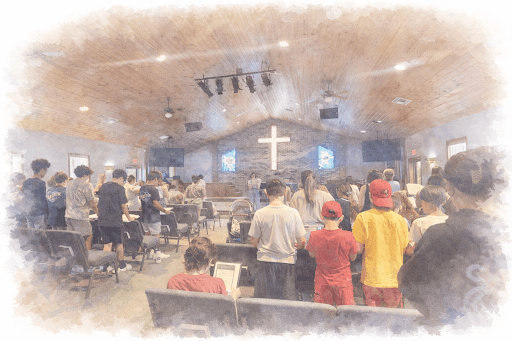
There is something exciting about loading up a group of students and heading offsite. Retreats, service projects, lock-ins at another church, trampoline parks, camps, conferences. These moments build connections and memories that stick.
They also introduce more risk and liability for churches than a typical Wednesday night in your own building.
The moment your youth group leaves campus, your environment changes. You lose some control. You depend on transportation, third-party facilities, and volunteer drivers. As a Certified Safety Professional, I can tell you that offsite events like youth retreats, camps, and lock-ins are one of the most overlooked liability areas in ministry.
The good news is this. A short, focused pre-departure checklist for youth ministry leaders can prevent most of the problems I see.
Here are seven things to check before the youth group heads offsite.
1. Confirm Approved Drivers and Vehicles
Transportation is where most serious incidents occur. A clear volunteer driver policy is one of the fastest ways to reduce youth ministry transportation risk.
Before anyone gets in a car, make sure:
- Drivers are on your approved volunteer list
- Licenses are current
- Proof of insurance is on file
- Vehicles are safe and roadworthy
- Seat belts are available for every passenger and everyone wears one
If you are using church vans, confirm maintenance logs are current and that drivers are familiar with the vehicle.
Pro Insight: No last-minute "Oh, I can drive too." If they are not pre-approved, they do not transport students.
2. Verify Permission Forms and Medical Information
This sounds basic, but I regularly see incomplete paperwork when groups leave campus. Permission slips and medical info are critical for emergency care and documentation.
Check that:
- Every student has a signed permission form
- Emergency contacts are listed
- Medical conditions and allergies are documented
- Medications are accounted for and handled appropriately
If a student requires medication during the event, assign a specific adult to manage it according to your policy.
Pro Insight: Keep digital copies accessible in case paper forms are lost or damaged.
3. Communicate the Itinerary and Expectations
Unclear plans create confusion. Confusion creates risk.
Before leaving, confirm:
- The exact location and address
- Departure and return times
- Who is responsible for each group of students
- Behavioral expectations
Students should know the rules before the bus or car doors close.
For example:
- Stay with your assigned leader
- No wandering off
- Follow facility rules
- No horseplay in parking lots
Clear expectations reduce preventable incidents.
4. Review Supervision Ratios
Offsite environments are less controlled than your church building. Offsite supervision ratios are a common gap in church safety programs.
Confirm:
- Adequate adult to student ratios
- Adults assigned to specific small groups
- No adult alone with one student unless your policy allows and safeguards it
Large events require tighter supervision, not looser.
Pro Insight: Assign a headcount leader who verifies numbers before departure, upon arrival, and before returning home.
5. Evaluate the Destination's Safety
You do not control the offsite venue, but you are still responsible for your students.
Before the event, ask:
- Does the facility have visible emergency exits?
- Are staff present and identifiable?
- Are high-risk areas supervised?
- Is there a clear meeting point if students get separated?
If it is an outdoor event, check weather conditions and contingency plans.
Pro Insight: A five-minute walk-through upon arrival can reveal hazards you did not anticipate.
6. Establish an Emergency Communication Plan
If something happens offsite, response time matters. An emergency communication plan keeps response organized and defensible.
Confirm:
- At least two adults have charged phones
- Emergency contacts are easily accessible
- Leaders know who calls 911
- One person communicates with parents if needed
- Transportation backup exists in case of vehicle breakdown
Everyone should know who is in charge if an incident occurs. Clear leadership reduces chaos.
7. Set Clear Pick Up and Drop Off Procedures
Returning to campus can be just as chaotic as leaving.
Before you depart, clarify:
- Where students will be picked up
- Who verifies authorized guardians
- How students are released
- What happens if a parent is late
Parking lots after dark are common risk zones. Good lighting and organized traffic flow matter.
Pro Insight: Never release a student to someone not on the approved pickup list without following your established verification process.
Bottom Line
Offsite youth events are powerful ministry moments. They build friendships, deepen faith, and create shared experiences that last.
They also require intentional preparation.
Seven quick checks before departure can significantly reduce risk, protect your students, and strengthen your church's safety culture. Preparation does not dampen fun. It protects it.
If you want a system that tracks driver approvals, stores permission forms, logs headcounts, and organizes offsite event documentation in one place, join the Wooli waitlist. We built it to make offsite safety simple and structured so your team can focus on ministry.
Safety always,
Lara

Written by
Lara Ward
Lara is a Certified Safety Professional (CSP) with deep expertise in risk management, OSHA standards, and organizational safety across sectors like hospitality and manufacturing. She leads the development of protocols, policies, and training content, serving as the platform's subject matter expert. Lara holds a Bachelor's degree in Public Health with a concentration in Environmental and Occupational Health from Kent State University, and a Master's in Safety Sciences from Indiana University of Pennsylvania.
More articles from Wooli
Churches & Non-Profits
How to Run a Monthly Safety Drill Without Disrupting Ministry
Learn how to run quick, calm 3-minute monthly church safety drills that protect your congregation and empower volunteers without causing panic or service delays.
Lara Ward·
Read
Churches & Non-Profits
Church Safety Plan: How to Build a Defensible Church Safety System
Churches are full of good people. That's one of the best things about them. It's also the reason many churches unintentionally take on more risk than they realize.
Wooli·
Read
Churches & Non-Profits
Church Security Risk Assessment: A Step-by-Step Guide for Safer Ministry
Learn how to conduct a church security risk assessment with a practical step-by-step process. Improve church safety, reduce risk, and build a stronger safety plan.
Wooli·
Read